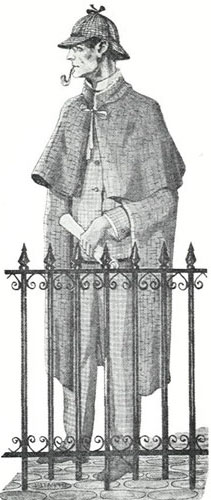
The Adventure of the Lost Holiday
Date - Autumn, 1931
The Case
Lord Penryn’s scheduled holiday was really official business, but the Prime Minister tells Pons that a document was stolen from Penryn's study and the trip was cancelled. The Strong-Cressington Plans contain information on the secret re-armament of France and England in response to Germany’s military build-up. War could result if Germany learned of the allies’ level of unpreparedness.
Quotes
Ø Pons: There are darker days coming. I had rather he (Krons) were permanently disposed of, but an alert opponent adds zest to the game, and, though he is a scoundrel, he is an opponent worthy of my mettle.
Ø Pons: Sir, I am no common housebreaker.
Ø Pons: Baron Kroll does not uphold the same standards as English gentlemen do. He carries on a secondary existence as a particularly obnoxious kind of leech who preys upon human failings by blackmailing his poor victims – not for money, for he has no need of that; I fancy Berlin makes him a generous allowance – but for anything in the way of state secrets which may be of value to his superiors.
Comments
Ø Baron Kroll is featured in back-to-back tales. While it seems that he is destined to play Moriarty to Pons’ Holmes, such is not the case; he does not seem to hold the pre-eminent villain spot in the Canon. While referenced by Parker as a potential suspect in future adventures, Kroll does not become a regular thorn in Pons’ side (or vice versa).
Ø This tale was certainly inspired by the Holmes case chronicled as The Adventure of the Naval Treaty. In both tales, the victim leaves the plans out of his possession for only a short time but they are purloined in his absence.
And the name of the Strong-Cressington Plans follows the syllabic form and structure of the Bruce-Partington Plans from the story of the same name. Kroll's blackmailing activities remind the reader of The Adventure of Charles Augustus Milverton. Finally, there is a nice tribute to Doyle in that Lord Penryn’s brother is named Cadogan, surely inspired by Cadogan West from Bruce-Partington.
However, Derleth consistently proves to the reader that the Pons stories are more than simple rehashings of the Sherlockian Canon. Pons’ path is far different than the trail Holmes followed in the Naval Treaty.
Ø Where is Bancroft? In a case that could “result in a national calamity” and the loss of millions of pounds and many lives, wouldn’t the Foreign Office be concerned? Of course, since the Prime Minister himself appears on Pons’ doorstep, the weight of matters is fully conveyed. We know Bancroft didn’t hesitate to enlist his aid a few months later when the Stone of Scone was stolen. It seems unlikely that another matter could be more pressing. Perhaps Pons’ brother was engaged in contingency planning. If the Plans were made public or acquired by another country, the Foreign Office would need to be ready to act accordingly.
Ø Pons served in British Intelligence during both World Wars. Surely Bancroft was active as well. Was Bancroft Pons’ control, working behind the scenes on international matters, while Solar Pons was out in the field? If so, The Lost Holiday would stand as a good example of such a working relationship, albeit during peacetime.
Return to Adventures Home